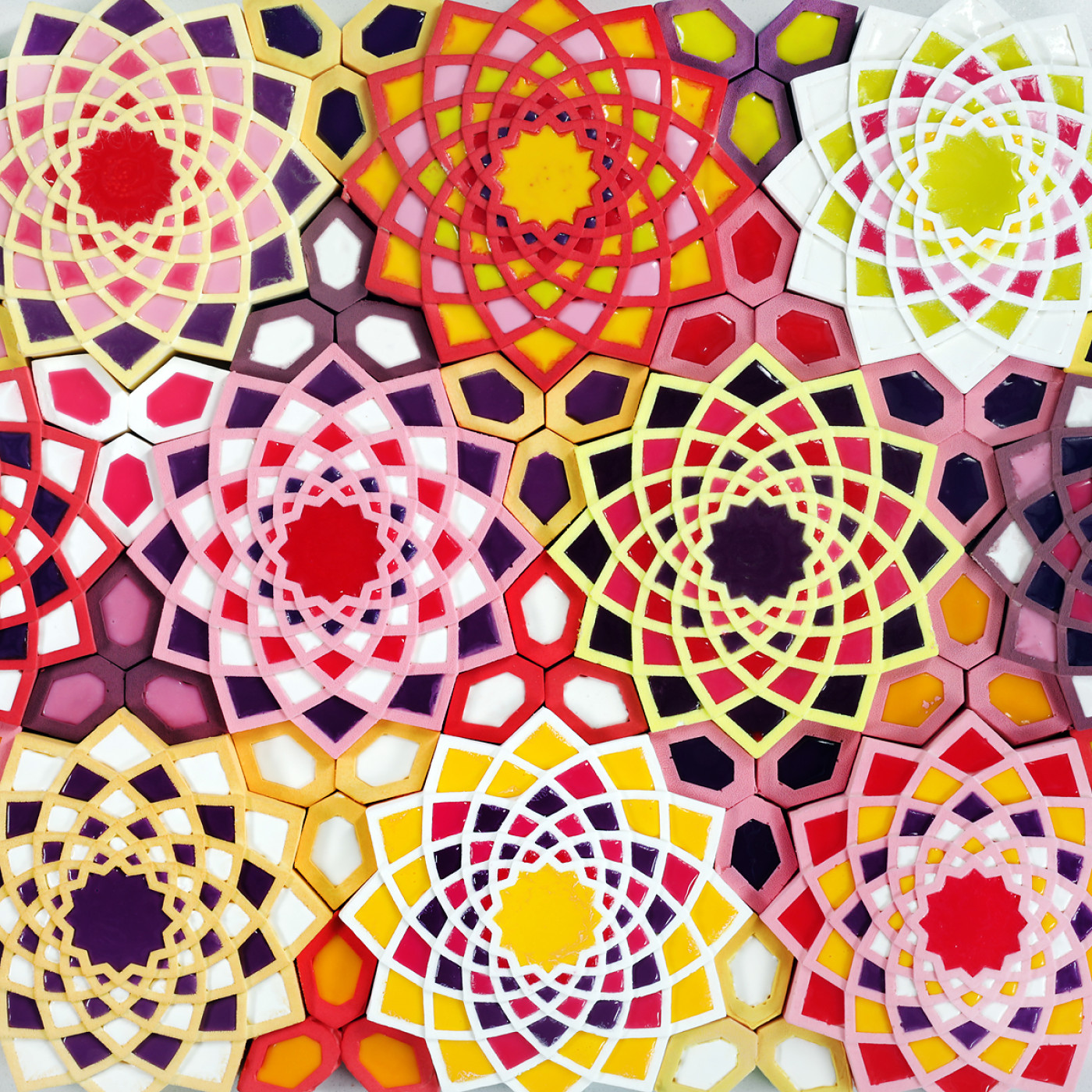
Star cakes composition specially for ukrarchipedia.com
Encyclopedia of Ukrainian Architecture – is a multimedia online project that demonstrates the panorama of Ukrainian architecture with the help of various media tools. As a pastry chef and architect my task was to prepare an architectural treat, so this is how my project “Perfect cities” was born.Since the project is about architecture, I was given the topic “Plan”. How can you spin a city plan into a pastry story? My choice fell on the perfect fortress-cities. They are extraordinary, they are all alike and yet very different. They have a complex geometrically regular or absolutely symmetrical shape. But among the prosaic rectangles and circles stand out fortress-cities built in the shape of polygonal stars.
I was most inspired by the city of Palmanova (Friulian: Palme) is a town and comune in Northeast Italy. The town is an example of star fort of the late Renaissance, built up by the Venetian Republic in 1593. Palmanova was built following the ideals of a utopia. It is a concentric city with the form of a star, with three nine-sided ring roads intersecting in the main military radiating streets. It was built at the end of the 16th century by the Venetian Republic which was, at the time, a major center of trade. It is actually considered to be a fort, or citadel, because the military architect Giulio Savorgnan designed it to be a Venetian military station on the eastern frontier as protection from the Ottoman Empire.
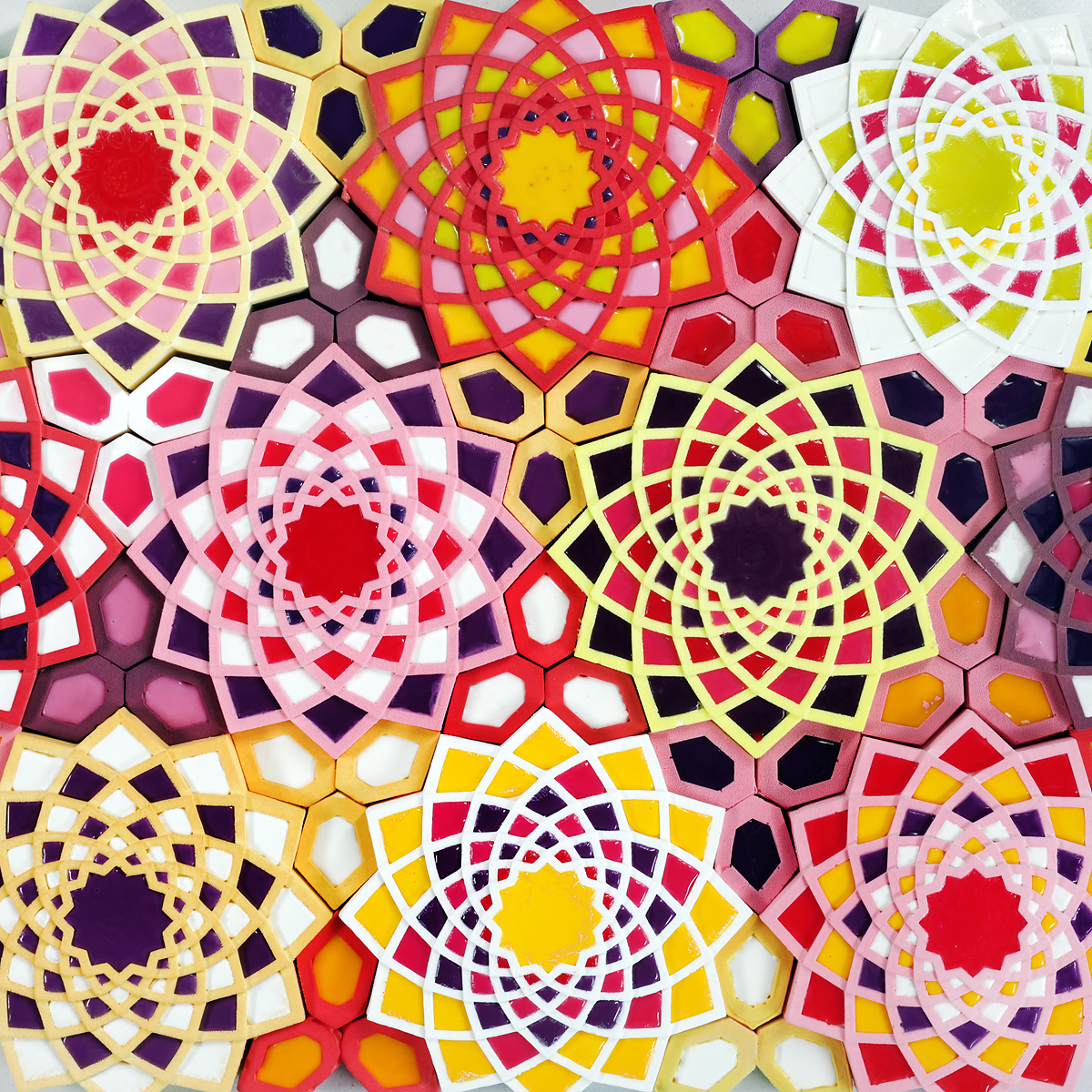
I have wanted to make a large-scale pattern for a long time, to create a large edible composition. It contains 16 big cakes and 80 mini cakes. My idea was to assemble everything without gaps so that the composition looked like a single multi-coloured carpet.
Before I started to work, I reviewed many different plans. Initially, I had many different design options, but eventually, I simplified it, added some bits and pieces and came up with the result of what you see in the video here.
About the mould:
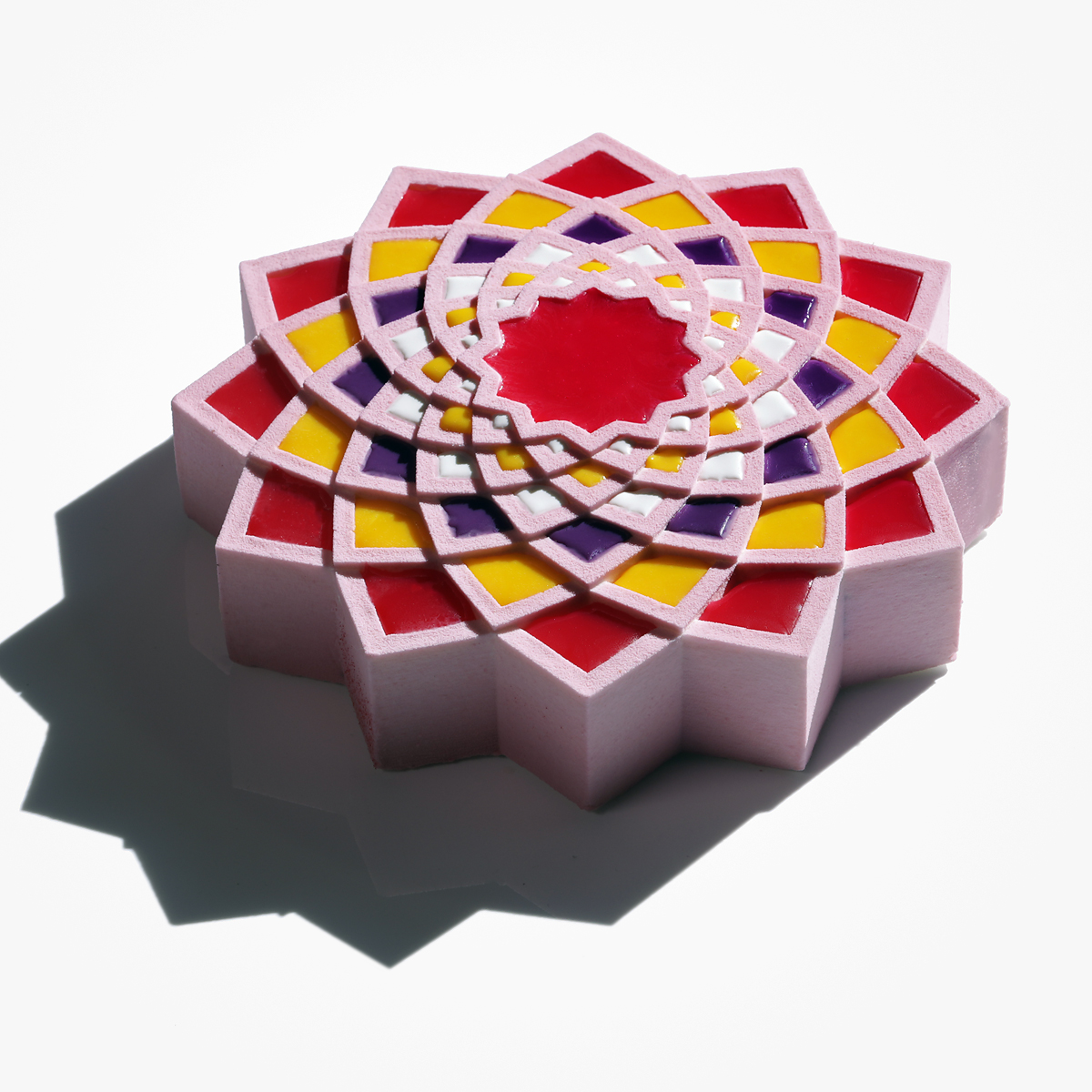
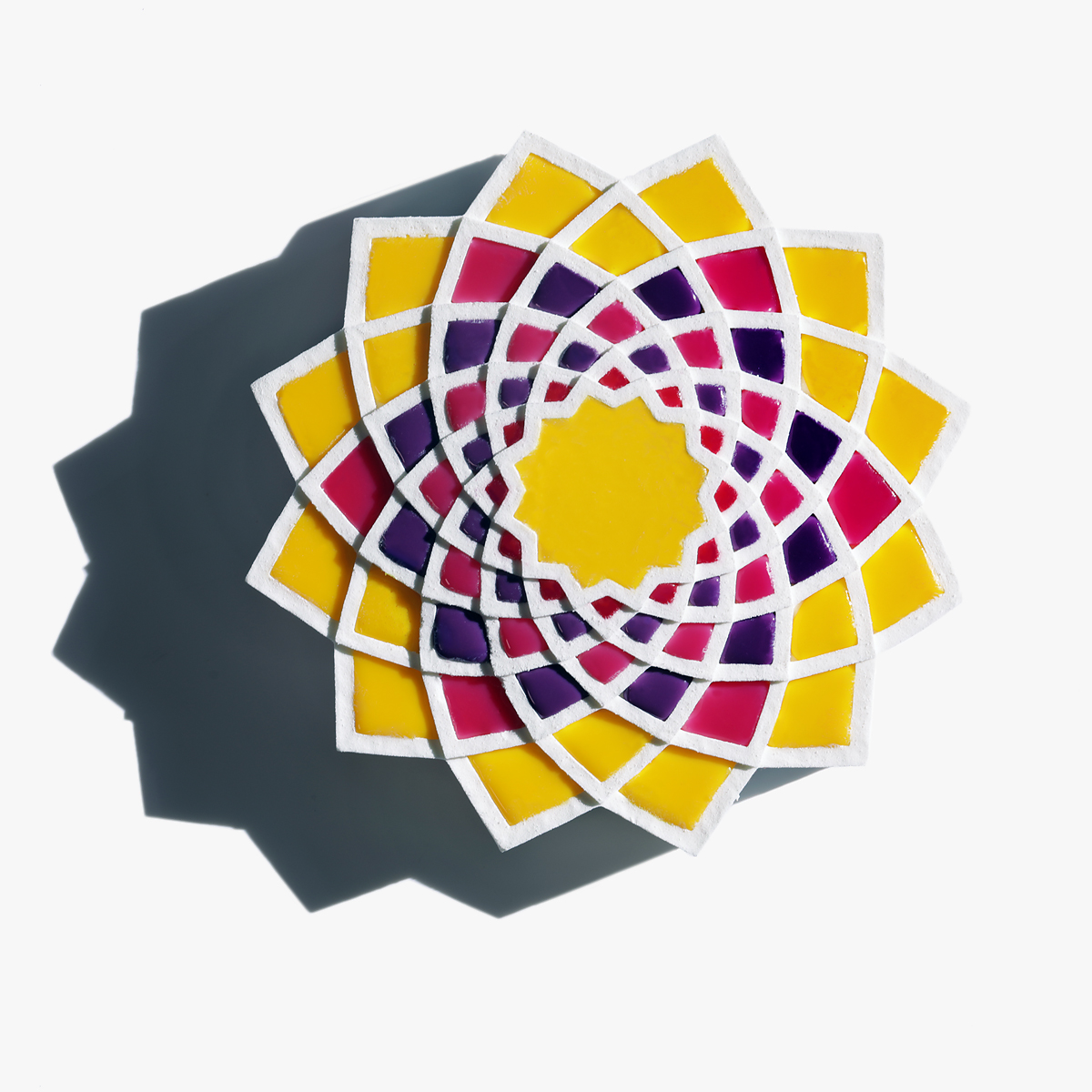
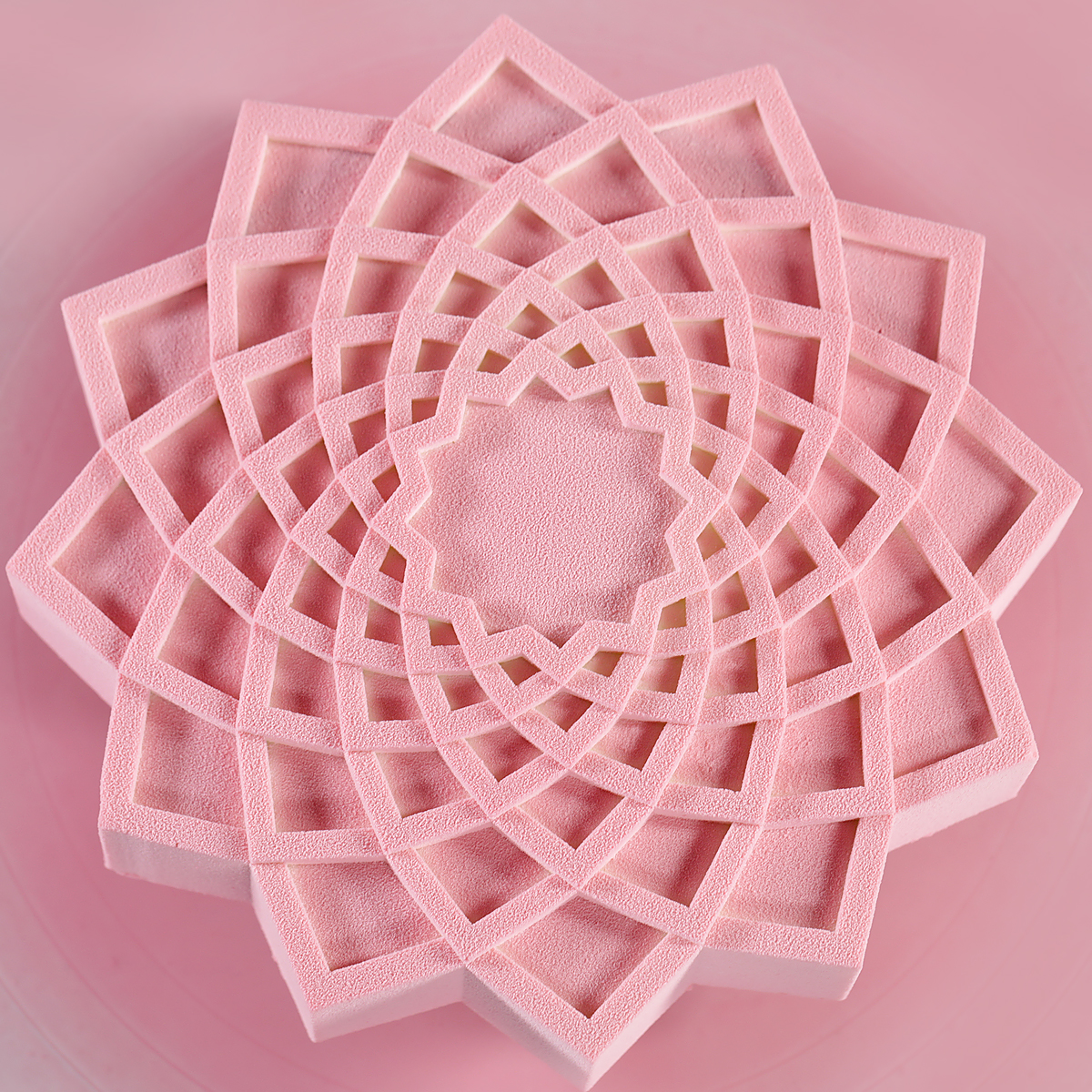
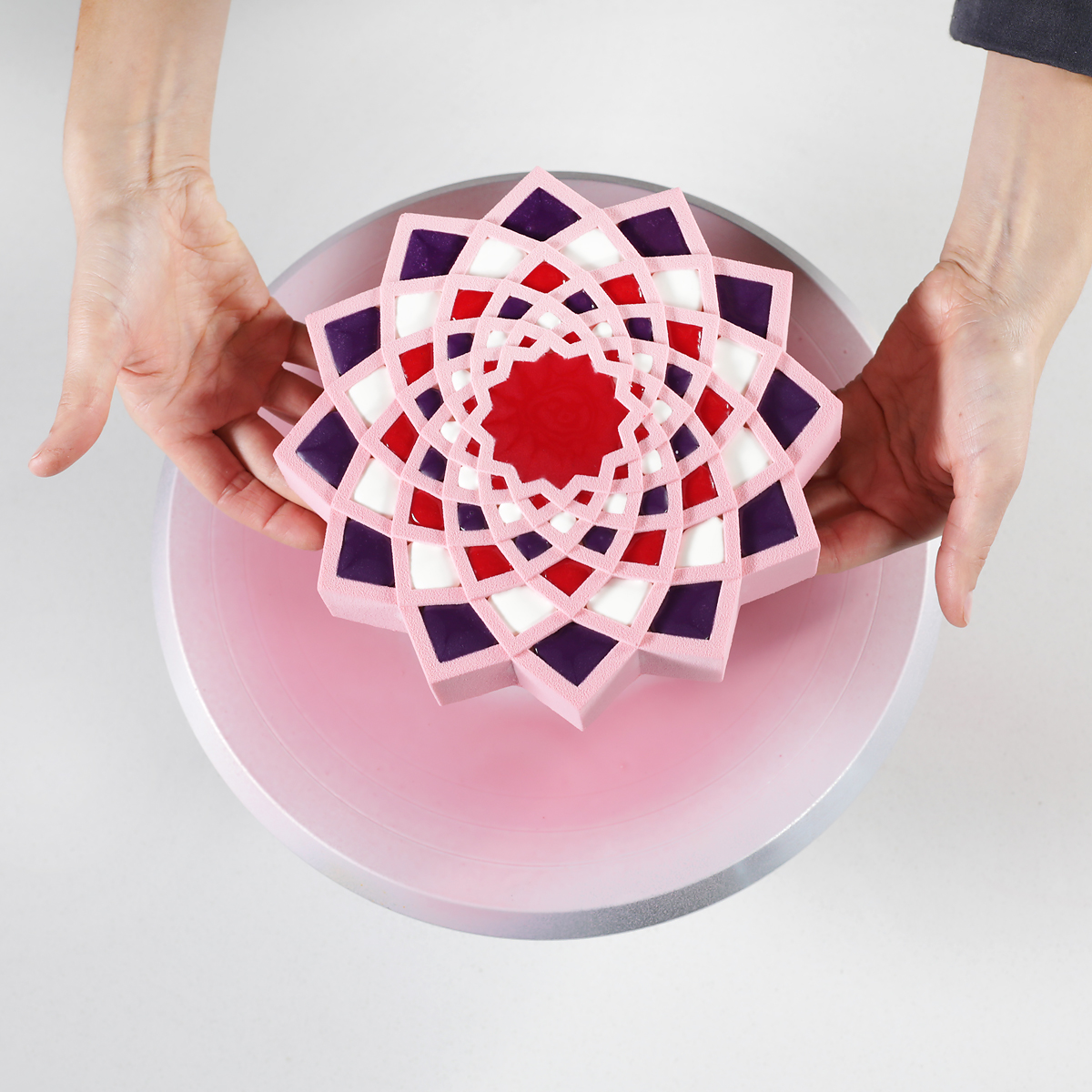
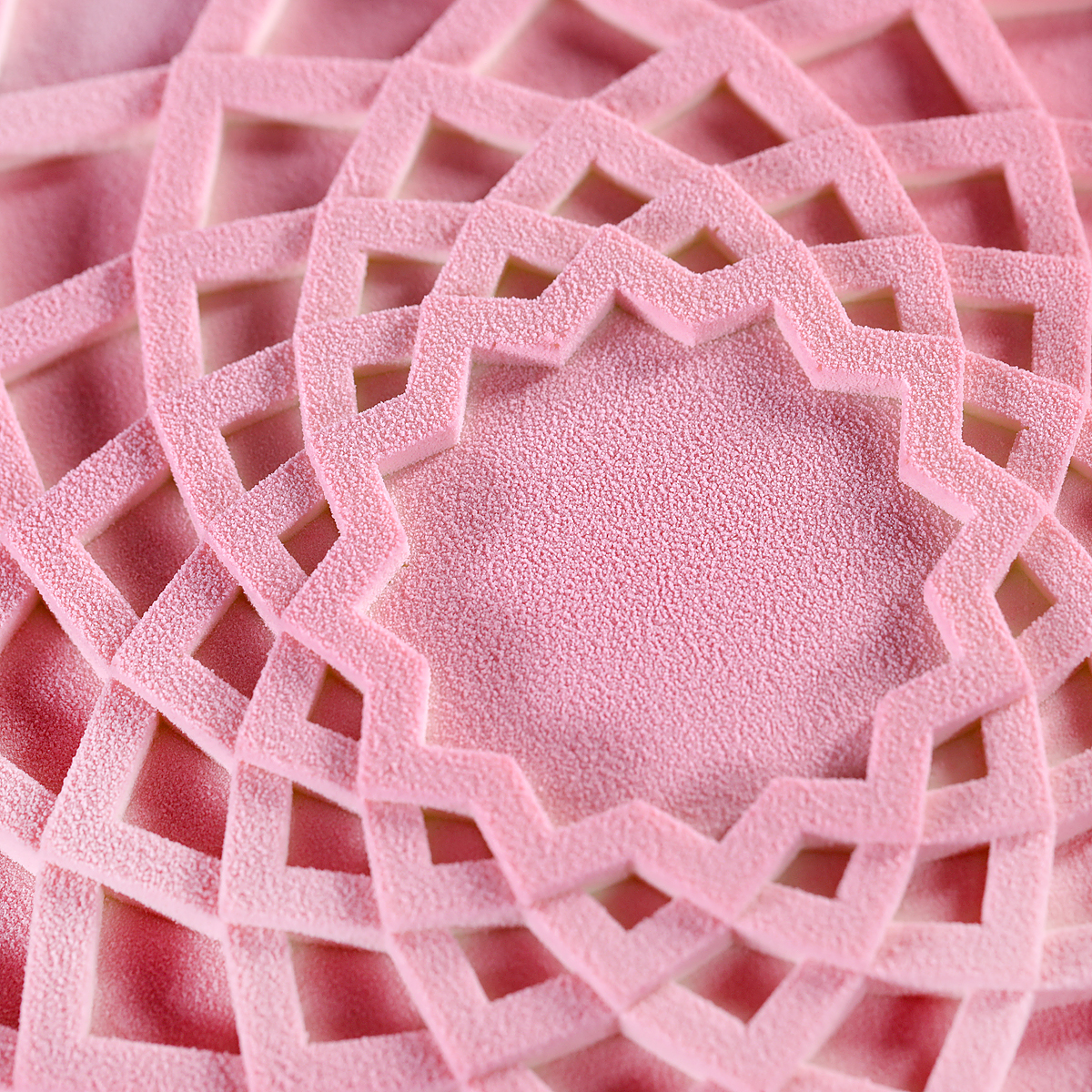
It is simple and complex at the same time. You don’t have to decorate it at all, but you can add any color you want. None of the designs in my composition is repeated.
I’m pretty sure you are gonna love it and will want one for yourself, so we have already started production at the factory. Handmade moulds will not be available to buy, but factory-made ones will be on sale around autumn, so we need some time because production is a long process.Work process:
A month was spent on printing, sketching and brainstorming, 3 days of baking in the studio, 1 day of painting and glazing, 1 day to prepare the composition and make photo content. The result, as always, is a few minutes long videoThere is a big article about my cake on the website ukrarchipedia.com and you can find here articles by other artists.
Plato’s Atlantis, Campanella’s City of the Sun and, of course, Thomas More’s Utopia, as well as Howard’s Garden City, the constructivist Soviet socialist cities along with the modernist Radiant City of Le Corbusier and the iconic Brasilia of Luis Costa and Oscar Niemeyer – people have been dreaming about ideal cities since antiquity till nowadays. According to the name, these cities usually have a perfect geometric shape or are subject to orthogonal planning. But more important than the form (and even function) in such urban formations – a specific “ideal” social order. However, utopias are rarely embodied, remaining simply a dream of thinkers or an “architectural fantasy” of builders. In the case of rare attempts of a dream implementation it for some reason inevitably turns into its opposite – disappointment.
In contrast to social utopias, the configuration of the plan and the perfection of the geometric shape were decisive for fortifications. For example, ideal fortress cities have a complex geometrically correct or completely symmetrical shape. But among the prosaic rectangles and circles, fortress cities built in the shape of polygonal stars stand out. The so-called bastion system of fortifications emerged in the 15th century in Italy as a reaction not only to the emergence of artillery, but also to the idea of high classicism of the Renaissance, and it was used until the mid-19th century. Among the most elegant ones – Palmanova (Italy), Naarden, Bourtange (Netherlands), Lille (France), Timisoara (Romania). The military engineers who designed and built such high-tech structures became world-famous, and their fortifications spread beyond Western Europe. Among them, one of the most popular was the system of the French engineer Marquis de Vauban. Together with Italian and French engineers, the methods of building bastion-type fortifications came to the Polish-Lithuanian Commonwealth, and thus to the Ukrainian lands (Brody, Pidhorets, Zbarazh, and Dubna fortresses). In particular, one can mention Guillaume de Beauplan, an engineer of several fortresses, better known to modern Ukrainians as the author of “A Description of Ukraine”.
If in the Renaissance, ideal fortresses served the defensive purposes of magnates and the state, then in the age of empires, they had an offensive function. For Dnipro Ukraine region, this period was associated with the incorporation into the Russian Empire in the late 17th and early 18th centuries. By building fortresses, the empire marked its southern borders, distanced itself from the Muslim world and at the same time colonized the once no-man’s-land Wild Fields, showed its claws to its Western European neighbors – Sweden and the Polish-Lithuanian Commonwealth, and tamed the Ukrainian Cossacks. Gradually, with the expansion to the south, new fortresses of the Ukrainian line (Oleksiyivska, Borysoglibska, Orlovska, Mykhailivska, etc.) appeared, and the old ones fell into disrepair until the Russian Empire gained access to the Black Sea as a result of several successful wars with Turkey.
Today, Ukrainian star-fortresses have become almost invisible, they have merged with the landscape, from the perspective of human height, their earth mounds resemble ordinary hills overgrown with grass. But some “stars” can still be seen from an aerial photograph or drone and… they can be tasted. After all, the world-famous architect and confectioner Dinara Kasko developed the perfect recipe and shape of the star city-cake for the “Encyclopedia of Architecture of Ukraine”. The real dimensions of the geometrically perfect shape of ideal fortresses for centuries deprived users of architecture of the pleasure of observing it, touching it and reading its symbolism. Instead, a cake of the same shape allows to enjoy the absolute beauty of geometry without the side effects of a utopian approach. Due to their typical shape, Dinara’s star-cities can be cast and tasted in any corner of our planet. They are able to spread faster than the ideas of classicism, although, unlike classicism itself, they do not require the creation of empires and colonies, the deployment of military campaigns and expansions.
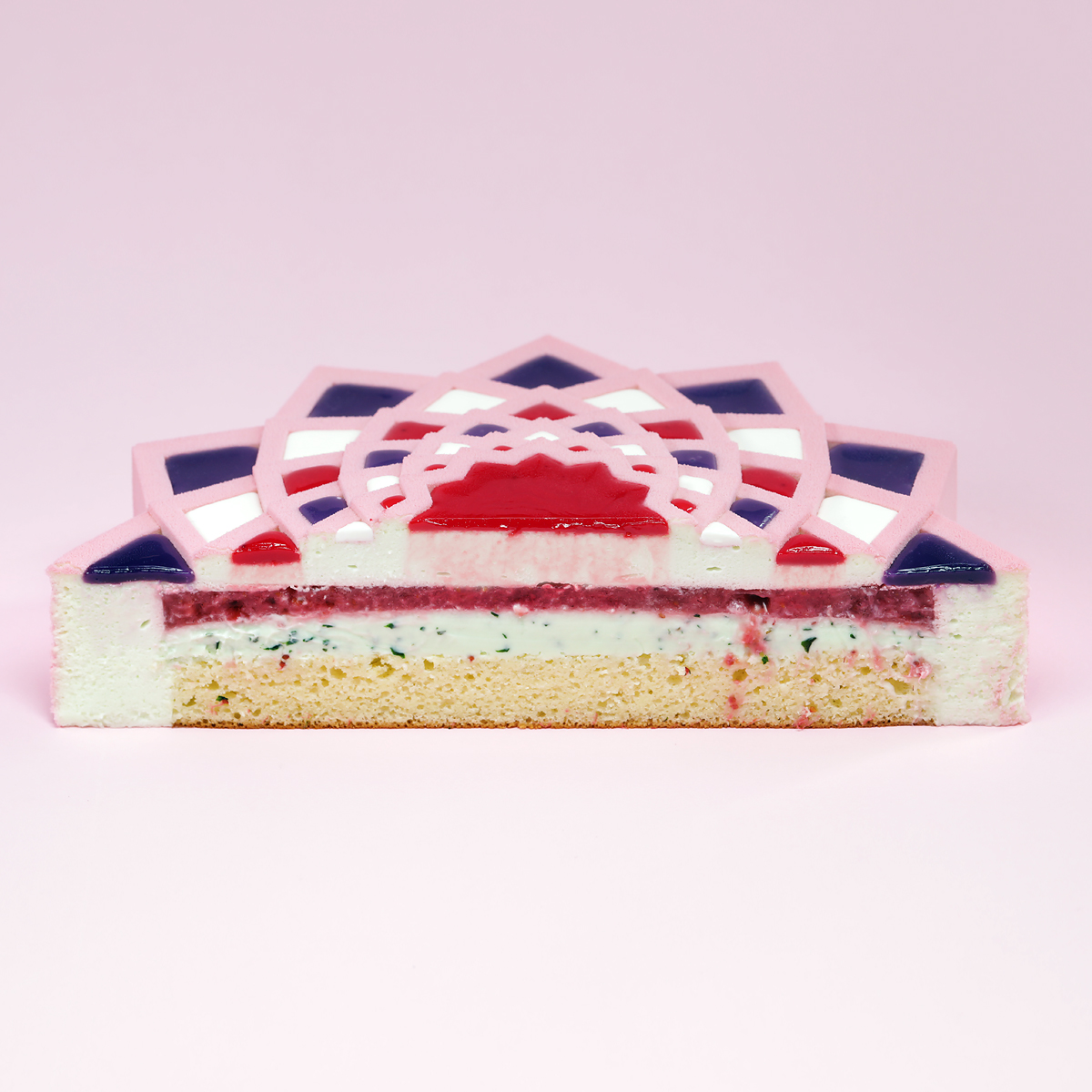
Like a cake, Dinara’s work can be divided into several layers. On the one hand, her work once again confirms a simple formula: an architect always remains an architect. Even if s/he designs, constructs, interprets and implements his/her ideas not in traditional building materials – bricks, concrete, wood, cement, but, for example, in biscuit, chocolate, jelly and cream. In her videos, Dinara manages to demonstrate the process of production of architectural objects, where all its components are present: master, technology, equipment (“machine”), “stamped” architectural form and its content. Such documentation of each step reveals all the secrets of architectural cuisine, which are usually hidden behind a curtain of office flair and art pathos. In addition, the fact that such building materials are edible allows to conceptualize the very understanding of architectural form and shaping. As well as for Giovanni Battista Piranesi, Claude-Nicolas Ledoux or any architect who works with volumes, form is the main focus of Dinara’s work. But it is not just about the geometric parameters of the object, but also about the quite reusable industrial confectionery mold made on a 3D printer. On the other hand, any conversation about the form leads to the question of its content, which in this case, unlike traditional architecture, does not claim the function of restructuring society, but only politely offers a consumer to enjoy a delicious filling.
But if one looks through a broader lens, the architecture of Dinara, placed in the modern Ukrainian context, is perhaps the best and most sarcastic statement about the state of affairs in the architectural field. Unlike commercial housing, mansions and shopping malls that look like cakes, Dinara’s cakes look like architecture. And finally, behind her work is a long-held idea: is it really necessary to build cubic meters of new volumes from bricks and concrete in the third millennium? After all, in the entire history of architecture, so much has been built so often and so badly, that the pressing question is not how to build further, but what to do now with everything built? From this point of view, Dinara’s activity is no longer a public act of annihilation of the architect but is a precursor of the fact that architects sometimes have times when it is better not to build than to build. Moreover, for architecture, the fate of which is inevitable destruction, there is no better destruction than eating it. Enjoy!
(Palmanova) — . 1593 . , , , . . .
ukrarchipedia.com
, . , - . -, . XV , , XIX . – (), , (), (), (). , , , . . , (, , , ). , , , « ».
, . XVII – XVIII . , , , – . , , (, , , ..), , ., . , : . , , – , , , , , , , , . , : , , ( «»), «» . , . , , , . , - , , – . , , 3D-. , , , , , .
x